Analysis
In the spotlight
Beijing and Washington, DC Clash Over Excess Capacity: A Guide for the Bewildered
Published at 29 Jul 2026
On 28 July 2026 China’s MOFCOM published a position paper on the trade-related aspects of excess capacity. This follows the initiation in March 2026 of a U.S. investigation into such matters as they relate to 16 trading partners, including China. That investigation may soon result in further import restrictions being imposed by the United States. By posing 10 specific questions about excess capacity, this note sheds light on the substantive disagreement between Beijing and Washington, DC on this salient trade policy matter.
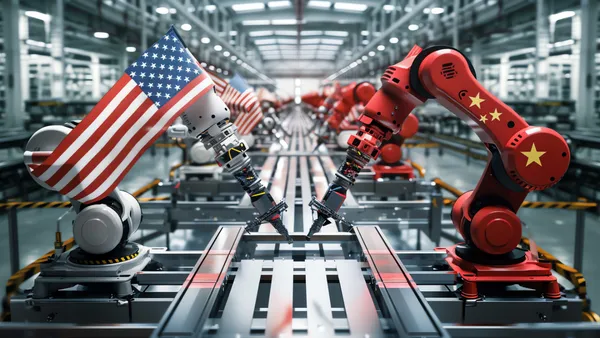
The US tariff level barely moves as Section 122 lapses as two Section 301 duties take its place
Published at 24 Jul 2026
Between 21 and 24 July 2026 the trade-weighted average US tariff barely moves, from 11.0% to 11.2% of import value even though a near-uniform surcharge gives way to two country-specific regimes, and relative market access spreads out again.
Forced-Labour Section 301 Tariffs on 60 Economies Take Effect on 24 July: An Overview of the Final Action
Published at 24 Jul 2026
The United States Trade Representative's final action in its 60 forced-labour Section 301 investigations took effect on 24 July 2026, imposing additional duties of 10% or 12.5% on all products of the investigated economies.

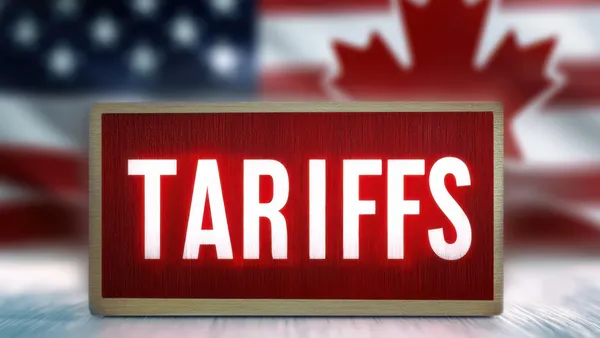
Section 338 tariffs raise Canada’s average US tariff to 6.27%
Published at 21 Jul 2026
Three proclamations of 20 July 2026 rest on Section 338 of the Tariff Act of 1930 against Canada, the statute's first invocation since the 1940s. From 19 August, the duty covers $17.7bn of Canadian goods, most of it at the full 50% rate, and USMCA certification offers no relief. Canada's average US tariff rises by 1.89 points overnight, to 6.27%.
All pieces
Beijing and Washington, DC Clash Over Excess Capacity: A Guide for the Bewildered
Published at 29 Jul 2026
On 28 July 2026 China’s MOFCOM published a position paper on the trade-related aspects of excess capacity. This follows the initiation in March 2026 of a U.S. investigation into such matters as they relate to 16 trading partners, including China. That investigation may soon result in further import restrictions being imposed by the United States. By posing 10 specific questions about excess capacity, this note sheds light on the substantive disagreement between Beijing and Washington, DC on this salient trade policy matter.
One Year Since Turnberry: What has changed in transatlantic trade since then?
Published at 27 Jul 2026
One year on from the political agreement on EU-US trade reached in Turnberry, Scotland, transatlantic trade imbalances have narrowed sharply. However, the EU is not on track to meet its purchase commitments in energy and AI chips.
The US tariff level barely moves as Section 122 lapses as two Section 301 duties take its place
Published at 24 Jul 2026
Between 21 and 24 July 2026 the trade-weighted average US tariff barely moves, from 11.0% to 11.2% of import value even though a near-uniform surcharge gives way to two country-specific regimes, and relative market access spreads out again.
Forced-Labour Section 301 Tariffs on 60 Economies Take Effect on 24 July: An Overview of the Final Action
Published at 24 Jul 2026
The United States Trade Representative's final action in its 60 forced-labour Section 301 investigations took effect on 24 July 2026, imposing additional duties of 10% or 12.5% on all products of the investigated economies.
Section 338 tariffs raise Canada’s average US tariff to 6.27%
Published at 21 Jul 2026
Three proclamations of 20 July 2026 rest on Section 338 of the Tariff Act of 1930 against Canada, the statute's first invocation since the 1940s. From 19 August, the duty covers $17.7bn of Canadian goods, most of it at the full 50% rate, and USMCA certification offers no relief. Canada's average US tariff rises by 1.89 points overnight, to 6.27%.
The Final Brazil Section 301 Tariff Takes Effect on 22 July with Wider Exemptions
Published at 16 Jul 2026
USTR's final Section 301 action on Brazil takes effect on 22 July. We estimate Brazil's effective US tariff rises from 11.0% to 17.5%, and stays near there: when the Section 122 surcharge lapses on 24 July, a new Section 301 tariff on forced labour takes its place. The 25% Brazil action adds 6.5 points, half a point below the June proposal.

The Services Turn in Trade Securitisation
Published at 15 Jul 2026
Trade securitisation is moving from goods to services. Governments enacted 327 security-justified measures affecting services in the first half of 2026, more than in any full year before 2025. Global Trade Alert data shows that most are Western sanctions, but the shift survives their removal. The evidence also shows that the supply chain resilience measures reaching services concentrate in cloud and AI infrastructure.

Global Digital Policy Roundup: June 2026
Published at 10 Jul 2026
Our series for Tech Policy Press informs decisionmakers in the United States on developments in the other G20 countries.
GTA Monthly Roundup: June 2026
Published at 02 Jul 2026
This Roundup sums up the 823 trade and industrial policy developments documented by the Global Trade Alert team during June 2026. The report provides a geographic analysis of these developments, with a focus on the United States, China, and the European Union. It highlights five trends: the expansion of the US Section 301 investigations; the acceleration of industrial support for AI, chips and quantum; the adoption of multiple measures affecting steel; the tightening of export controls across major economies; and the proliferation of trade defence cases targeting China.

Chokepoint: Tracking Trade Policy Responses to the Hormuz Crisis
Published at 18 Jun 2026
Latest update: 18 June 2026, 4:00 pm
.png)
How Denial Funds the Capacity it is Meant to Block
Published at 18 Jun 2026
This note follows a single argument and shows how New Industrial Policy Observatory (NIPO) data can be put to work to support it. The argument is simple: each tightening of advanced-technology access by the United States and its Pax Silica partners lines up, in the data, with a fresh wave of Chinese state support for the same industries. The three figures that follow trace that pattern over time and across the coalition.
Global Digital Policy Roundup: May 2026
Published at 17 Jun 2026
Our series for Tech Policy Press informs decisionmakers in the United States on developments in the other G20 countries.